- Free Consultation: (888) 808-2179 Tap Here To Call Us




Case Result: Civil Harassment Restraining Order Granted in Long Beach After Respondent Evades Service — Court Awards Our Client $10,000 in Attorney’s Fees


By Matthew Barhoma, Esq. — California State Bar No. 319339 | Published: 11/02/2026
This article is attorney advertising, is general information about California law, and is not legal advice for your situation. Prior results do not guarantee a similar outcome; every case depends on its own facts.
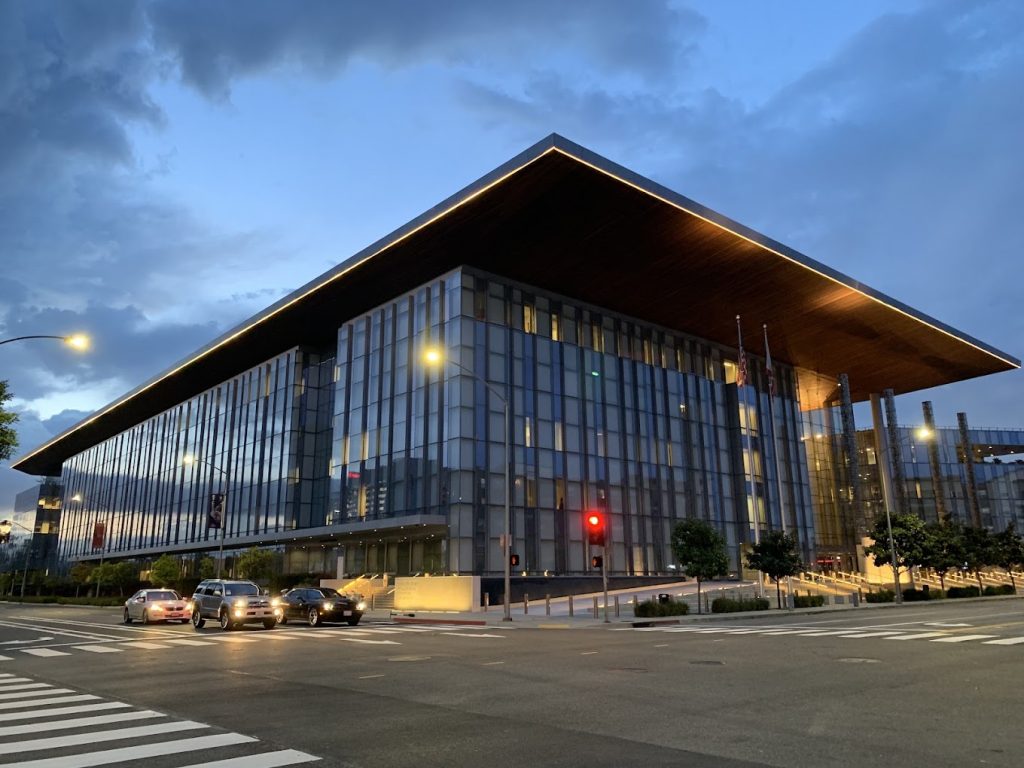
Restraining Order Law Firm recently obtained a civil harassment restraining order for a petitioner at the Governor George Deukmejian Courthouse in Long Beach, California, and the court then ordered the respondent to pay our client $10,000 in attorney’s fees under Code of Civil Procedure section 527.6. The respondent spent weeks avoiding service of the petition and temporary restraining order. We kept the temporary order alive through that stretch, completed personal service, and took the case through the hearing on the merits. The result: a restraining order after hearing protecting our client, and a fee award that shifted a substantial part of the cost of the case onto the person who caused it.
For anyone searching for a civil harassment restraining order lawyer in Long Beach, this case is a useful illustration of two things people rarely plan for when they file: what happens when the other side refuses to be served, and how the fee-shifting provision of CCP § 527.6 works when you win.
Case snapshot
- Case type: Civil Harassment Restraining Order (CHRO) under Code of Civil Procedure section 527.6 — petitioner-side representation
- Venue: Superior Court of California, County of Los Angeles — Governor George Deukmejian Courthouse, 275 Magnolia Ave., Long Beach, CA 90802
- Client: Petitioner (name withheld for privacy)
- Counsel: Restraining Order Law Firm — Matthew Barhoma, Esq.
- The problem: Respondent evaded personal service of the petition and temporary restraining order
- Result on the order: Civil harassment restraining order granted after hearing
- Result on fees: $10,000 in attorney’s fees awarded to the petitioner, payable by the respondent
Why service of process is where civil harassment cases stall
A civil harassment restraining order case moves in three steps: the petition is filed, a temporary restraining order (TRO) may be granted the same day or the next court day, and a hearing on a longer order is set roughly three weeks out. Between the first step and the third sits the requirement that almost nobody thinks about until it goes wrong — the respondent has to be personally served.
Under CCP § 527.6(m), the petition, the notice of hearing, and any temporary restraining order must be personally served on the respondent at least five days before the hearing, unless the court shortens that time. “Personally served” means a person over 18 who is not a party to the case hands the documents to the respondent. It cannot be done by mail. It cannot be done by the petitioner. The forms the Judicial Council requires in a CHRO case reflect this structure: the Request for Civil Harassment Restraining Orders (CH-100), the Notice of Court Hearing (CH-109), the Temporary Restraining Order (CH-110) if one issues, a blank Response (CH-120) for the respondent, and — the document that proves the whole thing was done — the Proof of Personal Service (CH-200).
Here is the practical consequence. If the respondent has not been personally served by the deadline, the court cannot hold the hearing against him, no matter how strong the petition is. The petitioner is left with two bad options and one good one.
The bad options are to show up unserved and hope, or to give up. The good one is the mechanism the statute builds in for exactly this situation: ask the court to continue the hearing and reissue the temporary order.
How a respondent “evades” service — and why the court does not reward it
Some respondents avoid service by accident; they travel, they move, they work odd hours. Others do it on purpose. They stop answering the door. They have a roommate say they moved. They leave by the back gate when a process server pulls up. They change their schedule once they realize someone is looking for them. In this case the respondent fell into the second category.
A respondent who does this is usually betting on one of two outcomes: that the temporary order will lapse on the hearing date and the petitioner will walk away, or that a self-represented petitioner will not know how to keep the case alive. Neither bet pays off against counsel who understands the procedure.
Our approach was systematic:
- Documented every attempt. A registered process server made repeated attempts at the respondent’s residence and other known locations at varying times of day, and recorded each attempt — date, time, address, what was observed — in a declaration of due diligence. Those declarations matter later; they are the evidence the court relies on when it decides whether to continue the hearing, and they are part of the record the court considered when it looked at the respondent’s conduct.
- Requested a continuance and reissuance of the TRO before the hearing date. CCP § 527.6 allows the petitioner to ask the court to continue the hearing, and the temporary restraining order remains in effect while the case is continued. The court issues a new hearing date on form CH-116, and the temporary order is extended to that new date. The key point is that an evading respondent does not run out the clock on the petitioner’s protection; the TRO stays enforceable throughout.
- Changed the service plan, not the goal. Once a respondent is actively avoiding one address and one time window, repeating the same attempts is a waste of money. We adjusted locations and timing based on what the attempts had revealed.
- Completed personal service and filed the CH-200. The respondent was personally served with the full packet — including the reissued temporary order and the new hearing date — more than five days before the continued hearing. The Proof of Personal Service was filed with the court so the record showed, on its face, that the hearing could proceed.
Can the court ever excuse personal service in a civil harassment case?
The honest answer is that the statute is built around personal service, and a petitioner should plan for it rather than around it. Recent amendments to California’s restraining order statutes have expanded the circumstances in which a court may authorize alternative methods of service after a showing of diligent attempts at personal service. What is certain is that any request of that kind rises or falls on the due-diligence record — the dated, specific declarations described above. A petitioner who cannot show the court what was tried, when, and where has nothing to ask for.
In this matter, persistence made the question academic: personal service was completed. But the due-diligence record we built along the way was not wasted effort. It became part of the story the court heard about who this respondent was and how he had conducted himself once the case was filed.
The hearing: proving harassment by clear and convincing evidence
A civil harassment restraining order hearing is a trial. The petitioner bears the burden of proving, by clear and convincing evidence, that the respondent engaged in “harassment” as CCP § 527.6(b)(3) defines it: unlawful violence, a credible threat of violence, or a knowing and willful course of conduct directed at a specific person that seriously alarms, annoys, or harasses that person, serves no legitimate purpose, and would cause a reasonable person substantial emotional distress — and did cause it. “Clear and convincing” is a higher standard than the preponderance standard used in domestic violence restraining order cases, and petitioners who come to the hearing with a general account of feeling frightened, rather than dated, documented conduct, often lose.
We prepared the case the way a contested trial is prepared. The court found that the statutory elements were met and issued a civil harassment restraining order after hearing.
The order was entered into CLETS, the California Law Enforcement Telecommunications System, which means any peace officer in the state can confirm its terms and enforce it. Violation of a civil harassment restraining order is a misdemeanor under Penal Code section 273.6.
The $10,000 fee award under CCP § 527.6(s)
Most people filing a civil harassment petition assume they will absorb the cost of their own lawyer. That is often true — but not always. Code of Civil Procedure section 527.6(s) gives the court discretion to award court costs and attorney’s fees to the prevailing party. The provision is two-sided: a respondent who defeats a petition can also recover fees. It is not automatic, and it is not a penalty. It is a discretionary allocation of who should bear the cost of the litigation.
We asked the court to exercise that discretion in our client’s favor and supported the request with the fee record. The court awarded our client $10,000 in attorney’s fees, payable by the respondent.
Two features of this result are worth underlining for anyone considering whether to retain counsel on a civil harassment petition. First, the court’s fee award turned a case the client had to fund up front into one the respondent ultimately paid a substantial part of. Second, the respondent’s conduct in avoiding service did not help him; it lengthened the case, increased the fees incurred, and the fees incurred during the service period were part of the award.
What this case means if you are trying to get a restraining order in Long Beach
If you are weighing whether to file a civil harassment petition in Long Beach — against a neighbor, a former roommate, an acquaintance, a stalker, someone with no family or dating relationship to you — the lessons from this case are concrete.
Expect service to be the hard part, and plan for it. Before filing, gather every address, workplace, vehicle, and routine you know for the respondent. The best time to think about how someone will be served is before the clock starts, not after.
A respondent who hides does not defeat your temporary order. The TRO stays in effect while the court continues the hearing for service. Ask for the continuance before the hearing date lapses, and keep the proof of your attempts.
The hearing is a trial, and the standard is high. Clear and convincing evidence means dated, specific, documented conduct — not impressions. The time to organize that evidence is during the service period, not the night before.
Attorney’s fees are recoverable. If you prevail, CCP § 527.6 allows the court to order the respondent to pay your fees. Build the record from the first invoice.
Restraining Order Law Firm represents petitioners and respondents in civil harassment, domestic violence, workplace violence, and elder abuse restraining order matters throughout Los Angeles County — including cases heard at the Long Beach courthouse — and across Orange, San Diego, Riverside, San Bernardino, and Ventura Counties. Our Los Angeles office is at 835 Wilshire Blvd., Floor 5, Los Angeles, CA 90017; our Orange County office is at 695 Town Center Dr., #1200, Costa Mesa, CA 92626. Attorney Matthew Barhoma handles both the civil restraining order case and any related criminal matter, which matters when harassment conduct also draws a police report. Learn more about civil harassment restraining orders in Long Beach or read our guide to Code of Civil Procedure section 527.6.
Call (888) 808-2179 or request a consultation.
Frequently asked questions
What happens if the respondent avoids being served with a civil harassment restraining order in California? The hearing cannot go forward against a respondent who has not been personally served at least five days beforehand, but the petitioner can ask the court to continue the hearing and reissue the temporary restraining order. The TRO stays in effect during the continuance.
Can I serve the restraining order papers myself? No. California requires personal service by someone over 18 who is not a party to the case — typically a registered process server, a sheriff’s deputy, or a friend or relative who is not involved in the dispute. The petitioner cannot serve the respondent.
How many days before the hearing must a civil harassment restraining order be served? At least five days before the hearing, unless the court orders a shorter time. Service must be personal; mail is not sufficient.
Does a temporary restraining order expire if the hearing is continued? No. When the court continues the hearing because the respondent has not been served, the temporary restraining order is extended to the new hearing date and remains fully enforceable.
Can a petitioner recover attorney’s fees in a civil harassment restraining order case? Yes. Code of Civil Procedure section 527.6(s) permits the court to award costs and attorney’s fees to the prevailing party, petitioner or respondent, at the court’s discretion. In the case described above, the court awarded our client $10,000.
What is the standard of proof for a civil harassment restraining order? Clear and convincing evidence — the petitioner must show it is highly probable that the respondent engaged in unlawful violence, a credible threat of violence, or a course of conduct meeting the statutory definition of harassment under CCP § 527.6(b)(3).
Where are civil harassment restraining order hearings held for Long Beach? Cases arising in Long Beach are generally heard at the Governor George Deukmejian Courthouse, 275 Magnolia Ave., Long Beach, CA 90802. See our Long Beach courthouse guide.
Prior results do not guarantee a similar outcome. Every restraining order case depends on its own facts, evidence, and the discretion of the court.