- Free Consultation: (888) 808-2179 Tap Here To Call Us




Riverside Domestic Violence Restraining Order Secured by Stipulation at the Menifee Justice Center: A Case Result and Complete Guide for Petitioners and Respondents


By Matthew Barhoma, Esq. (California State Bar No. 319339), Restraining Order Law Firm
Published September 2026
A Riverside domestic violence restraining order is a civil court order issued by the Superior Court of California, County of Riverside, under the Domestic Violence Prevention Act (Family Code § 6200 et seq.) that prohibits a person in a close relationship with the petitioner from abusing, contacting, or coming near them, and that is entered into the California Law Enforcement Telecommunications System (CLETS) so that any peace officer in the state can enforce it on the spot. In a recently concluded matter at the Menifee Justice Center, Restraining Order Law Firm represented the petitioner, and the respondent, after being served with the petition and the temporary restraining order, elected to stipulate to a restraining order after hearing rather than contest the allegations at trial. The result was a formal CLETS domestic violence restraining order, with the statutory firearm prohibition attached, entered without the petitioner having to testify at a contested evidentiary hearing.
This article does two things. First, it walks through what actually happened in that Riverside County case, with the client’s identity fully protected. Second, it uses the case as a lens to explain how a Riverside domestic violence restraining order works from both sides of the courtroom: what a petitioner has to prove, what a respondent is really agreeing to when they stipulate, and why the firearm consequences of a DVRO in California are far more serious than most people realize.
Every case is different. The outcome described here depended on its own facts and does not predict the result in any other matter. See the disclaimer at the end of this article.
The Case Result: A Riverside County DVRO Entered by Stipulation
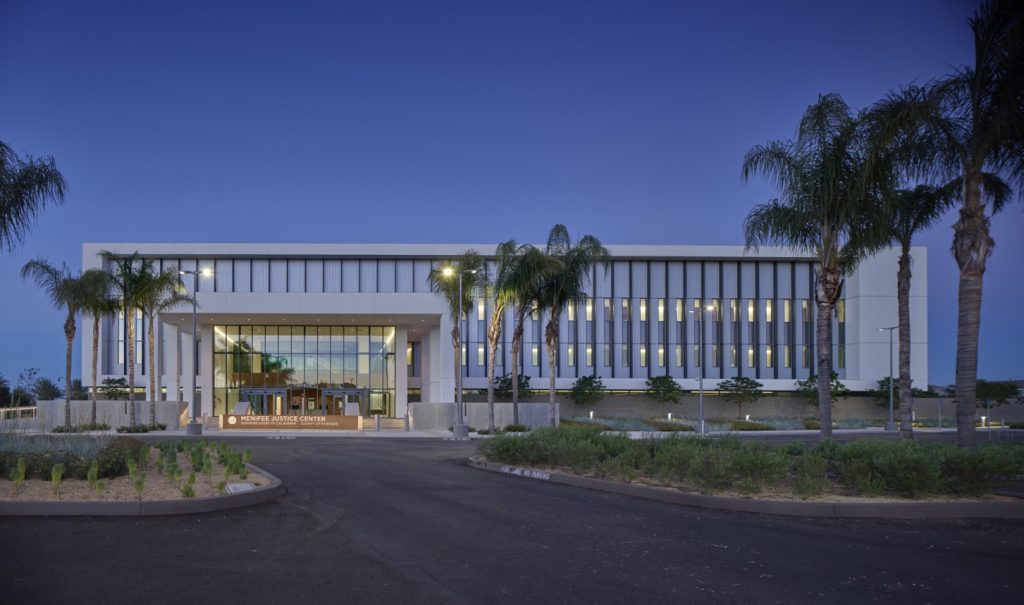
Our client filed a Request for Domestic Violence Restraining Order (Judicial Council form DV-100) in the Superior Court of California, County of Riverside, in March 2026. The case was assigned to the Menifee Justice Center, the Riverside Superior Court’s mid-county courthouse at 27401 Menifee Center Drive, which hears family law and domestic violence matters for communities including Menifee, Temecula, Murrieta, Hemet, Perris, Lake Elsinore, Wildomar, Canyon Lake, Sun City, and Winchester.
The petition alleged abuse within the meaning of Family Code § 6203, including threats of violence, and it asked the court for personal conduct orders, stay-away orders, and the firearm relinquishment orders that accompany every California DVRO. The court granted a Temporary Restraining Order (form DV-110) on the day of filing and set the matter for hearing. Because the respondent was alleged to have access to a firearm, the court also calendared a Review of Surrender of Firearms hearing, a Riverside Superior Court practice designed to confirm that a restrained person has actually turned in every firearm and all ammunition within the time the law allows.
The respondent was personally served with the DV-100, the Notice of Court Hearing (form DV-109), and the temporary order (form DV-110). At that point the respondent had two choices: file a Response (form DV-120), gather evidence, and contest the allegations at an evidentiary hearing, or resolve the case by agreement.
The respondent chose agreement. After the petition was filed and served, and after Restraining Order Law Firm substituted in as counsel of record for the petitioner, the respondent elected to stipulate to a domestic violence restraining order rather than go to trial. The court entered a Restraining Order After Hearing (form DV-130) as a formal CLETS order. The order includes personal conduct and stay-away provisions protecting our client, and it carries the mandatory prohibition on owning, possessing, purchasing, or receiving firearms, firearm parts, and ammunition for the life of the order under Family Code § 6389.
For our client, the significance of that outcome is hard to overstate. A contested domestic violence hearing means testifying, in open court, in front of the person you are asking the court to restrain, and being cross-examined about the worst moments of your life. A stipulated order delivers the same enforceable protection without that ordeal. Matthew Barhoma, Esq., served as attorney of record for the petitioner.
One more note on how this matter was handled: because of the petitioner’s circumstances, the case involved the appointment of a guardian ad litem, a court-appointed representative who acts on behalf of a party who cannot appear on their own. Riverside County courts see a meaningful number of DVRO petitions brought by or on behalf of vulnerable petitioners, and the procedure exists precisely so that a person’s inability to navigate the court process on their own is never a barrier to protection.
What Is a Riverside Domestic Violence Restraining Order?
A domestic violence restraining order, or DVRO, is the most powerful civil protective order available in California family court. It is governed by the Domestic Violence Prevention Act, codified at Family Code § 6200 and following . Unlike a civil harassment restraining order under Code of Civil Procedure § 527.6, which can be sought against a neighbor, coworker, or stranger, a DVRO is available only where the parties have a qualifying relationship listed in Family Code § 6211: spouses and former spouses, cohabitants and former cohabitants, people who are dating or formerly dated, people who have a child together, and people related by blood, marriage, or adoption within the second degree, including parents and children, siblings, grandparents, and in-laws.
Riverside County follows the same statewide framework as every other California county, but Riverside has its own courthouse structure, its own local practices, and its own electronic filing system. Domestic violence restraining orders in Riverside County may be filed at any Riverside Superior Court location, but the case will generally be assigned to the courthouse serving the parties’ ZIP code: the Riverside Family Law Courthouse at 4175 Main Street in downtown Riverside for the western region; the Menifee Justice Center for the mid-county region; the Southwest Justice Center in Murrieta for some southwest matters; the Larson Justice Center in Indio and the Palm Springs Courthouse for the Coachella Valley; and the Banning Justice Center and Moreno Valley Courthouse for their respective communities.
There is no filing fee for a domestic violence restraining order in Riverside County or anywhere in California, and the Riverside Superior Court’s eSubmit portal accepts DVRO filings electronically, which means a petition can be submitted the same day the abuse occurs.
What Counts as “Abuse” Under the DVPA
People often assume a domestic violence restraining order requires a physical injury. It does not. Under Family Code § 6203, “abuse” includes intentionally or recklessly causing or attempting to cause bodily injury; sexual assault; placing a person in reasonable apprehension of imminent serious bodily injury to themselves or another; and any behavior that could be enjoined under Family Code § 6320. That last category is the broadest and the most litigated. Section 6320 allows the court to enjoin molesting, attacking, striking, stalking, threatening, sexually assaulting, battering, credibly impersonating, falsely personating, harassing, telephoning, destroying personal property, contacting directly or indirectly, coming within a specified distance of, or “disturbing the peace” of the other party.
“Disturbing the peace of the other party” is defined by statute as conduct that, based on the totality of the circumstances, destroys the mental or emotional calm of the other party, and it expressly includes coercive control. Coercive control, in turn, includes isolating a person from friends and family, depriving them of basic necessities, controlling their movements or communications, and compelling them by force, threat, or intimidation to do something they have a right not to do.
The practical consequence for a Riverside domestic violence restraining order case is this: threats alone, if they place the petitioner in reasonable fear, are enough. A pattern of control, surveillance, and intimidation, with no physical contact at all, can be enough. The court is asked whether the petitioner has shown, by a preponderance of the evidence, reasonable proof of a past act or acts of abuse. The standard is not “beyond a reasonable doubt,” and it is not “clear and convincing.” It is “more likely than not.”
How a Riverside County DVRO Case Moves From Filing to Final Order
Understanding the procedural path helps both sides make better decisions. Here is how the case described above traveled, and how most Riverside County DVRO cases travel.
Step One: The Petition and the Temporary Restraining Order
The petitioner files form DV-100, supported by a declaration and any exhibits: photographs, text messages, voicemails, police reports, medical records, witness statements. If the petitioner asks for temporary orders, the judicial officer reviews the papers, usually the same day or the next court day, and decides whether to issue a Temporary Restraining Order on form DV-110. A TRO can issue without notice to the respondent and without a hearing, based solely on the petitioner’s sworn declaration. In Riverside County, TRO requests submitted through eSubmit are routed to the assigned department for review.
The TRO is a CLETS order from the moment it is signed. Once served, it prohibits the respondent from contacting or approaching the petitioner, and it triggers the firearm relinquishment clock discussed below.
Step Two: Service and the Respondent’s Window to Respond
The respondent must be personally served with the DV-100, DV-109, and DV-110 at least five days before the hearing, unless the court shortens time. The Riverside County Sheriff will serve DVRO papers at no charge; many petitioners instead use a registered process server for speed and reliability.
Once served, the respondent may file a Response on form DV-120. The DV-120 is the respondent’s opportunity to deny the allegations, tell their side, and ask the court to deny the order or narrow it. The respondent may also file their own DV-100 seeking a restraining order against the petitioner, which the court will hear at the same time.
Step Three: The Hearing, and Why It So Often Gets Continued
The court must set the hearing within 21 days of the TRO, or 25 days if good cause is shown. In practice, Riverside County DVRO hearings are continued regularly. Either party may request one continuance as a matter of right; the court also continues hearings when service is incomplete, when a party retains counsel and needs time to prepare, when the court orders an investigation or report, or when the court’s calendar cannot accommodate a contested evidentiary hearing that day. Each continuance is recorded on form DV-116, and the temporary restraining order is extended through the new hearing date. The matter described above was continued several times over roughly six months before it resolved, which is not unusual for a contested Riverside domestic violence restraining order case.
Step Four: Resolution — By Trial or By Stipulation
At the final hearing, the court either takes evidence and rules, or it enters an order the parties have agreed to. When the parties agree, the court enters a Restraining Order After Hearing on form DV-130 and marks it as entered by stipulation. That is what happened here.
What It Means When a Respondent Stipulates to a DVRO
This is the part of the case that respondents searching for information about a Riverside domestic violence restraining order most need to understand, and it is the part most frequently misunderstood.
A Stipulated DVRO Is a Real Restraining Order
A stipulated domestic violence restraining order is not a lesser order. It is entered into CLETS exactly like an order issued after a contested trial. Law enforcement will enforce it identically. The respondent’s name appears in the California Restraining and Protective Order System (CARPOS) exactly as it would after a trial loss. Every consequence discussed in this article, from firearms to housing to employment background checks, attaches to a stipulated order.
What a stipulation changes is the path, not the destination. The respondent gives up the right to cross-examine the petitioner, to present witnesses, and to have a judge decide whether the abuse actually occurred.
“With a Finding” Versus “Without a Finding”
Form DV-130 allows a stipulated order to be entered in one of two ways: with the court making a finding that the respondent committed abuse, or with the respondent agreeing to the order without admitting the allegations and without the court making a finding. The difference matters enormously, and it is the single most important thing a respondent must negotiate before agreeing to anything.
Under Family Code § 3044, when a court has found that a parent seeking custody has perpetrated domestic violence against the other parent or the child within the previous five years, there is a rebuttable presumption that awarding that parent sole or joint physical or legal custody is detrimental to the child. A stipulated DVRO entered with a finding of abuse can trigger that presumption in any current or future custody proceeding. A stipulation without a finding generally does not, although the underlying conduct can still be litigated in family court.
A finding of abuse can also matter in immigration proceedings, in professional licensing, in security clearance reviews, and in any later criminal case in which the DVRO conduct is relevant. A respondent who stipulates “to make it go away” without understanding this distinction may be making the most consequential legal decision of their life in the hallway of the Menifee Justice Center without knowing it.
In the case described above, the respondent stipulated to the order. The reasons a respondent makes that choice vary. Sometimes the evidence is overwhelming. Sometimes the respondent has parallel criminal exposure and does not want to testify under oath in a civil proceeding where the transcript can be used against them. Sometimes the respondent simply wants the matter to end and accepts the order’s terms. Whatever the reason, a respondent should never stipulate without first having an attorney review the DV-130 line by line, confirm which boxes are being checked, confirm the duration, and confirm whether a finding is being made.
Why Petitioners Should Welcome a Stipulation, With Conditions
From the petitioner’s side, a stipulation is usually a good result. It delivers the protection sought without the trauma and unpredictability of trial. But petitioners should not accept a stipulation blindly either. A petitioner’s attorney should ensure that the stipulated order includes every protected person who needs protection, that the stay-away distances are adequate, that the order covers the petitioner’s home, workplace, school, and vehicle, that the duration is long enough to be meaningful (the court may issue an order of up to five years, and it can be renewed permanently on a showing of continued reasonable apprehension, Fam. Code § 6345]), and that the firearm prohibition and any recordkeeping orders are included.
Firearms, CLETS, and the 24-Hour Rule: The Consequence Respondents Underestimate
Every California domestic violence restraining order, temporary or permanent, stipulated or litigated, prohibits the restrained person from owning, possessing, purchasing, receiving, or attempting to purchase or receive a firearm, firearm parts, or ammunition while the order is in effect. There is no exception for hunters, for collectors, for people with concealed carry permits, or for peace officers, though a narrow exemption exists for certain peace officers whose employment requires a firearm, subject to a psychological evaluation and court findings.
The mechanics are strict. A restrained person who is personally served with the order must surrender every firearm to local law enforcement, or sell or transfer it to a licensed firearms dealer, within 24 hours of service. If the restrained person was not personally served but otherwise received notice, the deadline is 48 hours. The restrained person must then file a receipt with the court, on form DV-800, within 48 hours of the surrender, proving compliance. Riverside Superior Court’s practice of calendaring a Review of Surrender of Firearms hearing, as it did in this case, exists to enforce exactly this requirement.
The consequences of noncompliance are criminal. Possessing a firearm while subject to a California protective order is a crime under Penal Code § 29825, punishable as a misdemeanor or, in some circumstances, a felony. Under federal law, 18 U.S.C. § 922(g)(8) independently makes it a federal offense for a person subject to a qualifying domestic violence protective order to possess a firearm or ammunition. In 2024, the United States Supreme Court upheld that federal prohibition against a Second Amendment challenge in United States v. Rahimi, confirming that DVRO firearm prohibitions are here to stay.
This is why the firearm prohibition in a stipulated order deserves its own discussion. A respondent who agrees to a DVRO is agreeing to give up firearms for the entire duration of the order, and to a CLETS record that will surface every time they attempt to purchase a firearm through a licensed dealer for as long as the order remains active. A respondent who is a hunter, a competitive shooter, a security guard, or anyone whose livelihood depends on firearms access needs to understand that a stipulation is not a compromise on this point. There is no such thing as a DVRO without a firearm prohibition.
Why “CLETS” Matters So Much
Californians searching for information about a Riverside domestic violence restraining order will see the word “CLETS” on nearly every form. CLETS stands for the California Law Enforcement Telecommunications System, the statewide database that every peace officer in California can query from a patrol car. When a DVRO is a CLETS order, it is entered into the California Restraining and Protective Order System, which means a Riverside County Sheriff’s deputy, a Temecula police officer, or a CHP officer in Sacramento can verify the order’s existence and terms instantly, without seeing a paper copy.
CLETS entry is what makes a restraining order enforceable in real time. If a restrained person is found within the stay-away distance of a protected person, the officer does not need to interpret a document or call the court. The order is in the system. Under Penal Code §§ 836(c)(1) and 13701(b), an officer with probable cause to believe a restrained person with notice of the order has violated it must arrest. A violation is prosecuted under Penal Code § 273.6 as a misdemeanor carrying up to one year in county jail and a fine of up to $1,000, and repeat violations involving violence can be charged as felonies.
A CLETS order also follows the restrained person into background checks. Employers running Live Scan checks, landlords running tenant screening, and licensing boards reviewing applications may see an active restraining order. That is another reason a respondent must think carefully before stipulating, and another reason a petitioner should insist on a CLETS order rather than a private agreement or an informal promise.
Practical Guidance for Riverside County Petitioners
If you are considering a Riverside domestic violence restraining order, the following practices meaningfully improve outcomes.
Write a declaration that a judge can rule on. The DV-100 asks for the most recent incident of abuse and prior incidents. Dates, locations, exact words spoken, and the effect on you matter more than adjectives. “He said he would kill me and then himself” is evidence. “He was abusive” is a conclusion.
Preserve primary-source evidence. Original image files with metadata, native exports from co-parenting apps, voicemail audio files, certified copies of police reports, and medical records carry far more weight than screenshots and journal entries prepared for litigation. Third-party corroboration, from a neighbor, a teacher, a friend who witnessed an incident, is more persuasive than self-generated records.
Request every order you need at the outset. Stay-away orders for your home, workplace, school, and vehicle; protection for household members; move-out orders; property control; animal protection; and firearm relinquishment. The DV-100 has a box for each. Orders not requested are rarely added later without a new filing.
Get the respondent served correctly and early. Riverside County judicial officers cannot hear a DVRO petition that has not been properly served, and defective service is the single most common reason a Menifee Justice Center DVRO hearing is continued.
Plan for the possibility of stipulation. If the respondent’s attorney proposes a stipulated order, have your own counsel review it against a checklist: every protected person named, every location covered, adequate duration, firearm provisions included, and clarity on whether a finding is being made.
Practical Guidance for Riverside County Respondents
Restraining Order Law Firm represents respondents in Riverside County DVRO cases as often as petitioners, and the respondent’s playbook is different.
Do not contact the petitioner. At all. The temporary order is in effect from the moment you are served. A “let’s talk this out” text is a violation of a CLETS order and can be charged as a crime under Penal Code § 273.6. Even a message sent through a third party can violate the order.
Surrender your firearms within 24 hours and file the DV-800. This is not optional and the Riverside court will hold a review hearing to confirm it. Noncompliance converts a civil case into a criminal one.
File a DV-120. Silence is not a defense. The DV-120 is your only opportunity to put your version of events before the judge in writing before the hearing. It should be a sworn, fact-specific rebuttal, not an argument about the petitioner’s character.
Evaluate the stipulation question with counsel, not alone. Ask: Is the proposed order with or without a finding of abuse? How long is it? Are there custody, property, or support orders folded into the DV-130? What are the collateral consequences for my employment, immigration status, professional license, or firearms? Would a shorter order without a finding be acceptable to the petitioner? A respondent who stipulates without answering those questions is not settling; they are surrendering.
Understand your criminal exposure. Allegations in a DVRO petition frequently overlap with conduct that could be charged criminally. Anything you say in the civil DVRO hearing, including in your DV-120, is under oath and admissible in a criminal case. Restraining Order Law Firm’s parent firm, Barhoma Law, P.C., handles civil restraining orders and criminal defense simultaneously, which allows us to coordinate strategy across both tracks rather than letting the civil case create problems in the criminal one. This dual-track capability is a primary reason respondents retain us.
If you have your own claim of abuse, file it. A respondent who has also been abused can file a DV-100 of their own. The court will consider both requests together and may issue mutual orders only on detailed findings that both parties acted primarily as aggressors and neither acted primarily in self-defense.
Can a Minor Seek a Domestic Violence Restraining Order in California?
Because the case discussed above involved procedural protections for a vulnerable petitioner, it is worth answering a question that generates a great deal of search interest. Yes. Under California law, a minor who is 12 years of age or older may file a request for a domestic violence restraining order on their own behalf without a guardian, parent, or guardian ad litem. A minor under 12 must proceed through a parent, guardian, or guardian ad litem. When a court determines that a party, whether a minor or an adult, needs a representative to protect their interests in the litigation, it may appoint a guardian ad litem under Code of Civil Procedure § 372, and Riverside County family courts do so routinely in DVRO cases involving minors or incapacitated parties.
Minors seeking protection from a parent, stepparent, or other relative are among the most vulnerable DVRO petitioners the courts see, and the DVPA’s relationship categories expressly cover parents and children and other relatives within the second degree.
Riverside County DVRO Timeline at a Glance
Day 0: DV-100 filed, in person or through eSubmit. No filing fee. TRO reviewed and, if granted, signed on DV-110. Days 1 to 16: Respondent personally served with DV-100, DV-109, DV-110. Proof of service (DV-200) filed. Within 24 hours of service: Respondent surrenders firearms and ammunition. DV-800 receipt filed within 48 hours. Before the hearing: Respondent may file DV-120 and, if applicable, a cross-request on DV-100. Day 21 to 25: Initial hearing. First continuance available as of right. DV-116 extends the TRO. Subsequent hearings: Contested evidentiary hearing with testimony and exhibits, or entry of a stipulated DV-130. After the order: CLETS entry within one business day; order enforceable statewide and, under the federal Violence Against Women Act’s full faith and credit provision, nationwide. Before expiration: Petitioner may request renewal on DV-700 for five years or permanently.
Why Riverside County DVRO Cases Benefit From a Specialist
Domestic violence restraining orders sit at the intersection of family law, criminal law, evidence law, and firearms law. A Riverside domestic violence restraining order hearing is a mini-trial with live testimony, cross-examination, hearsay objections, and exhibit foundation requirements, all compressed into a calendar where the judicial officer may be hearing a dozen matters that morning. The attorney who knows the Menifee Justice Center’s practices, who knows how the assigned department handles firearm review hearings and continuances, and who can anticipate whether the other side is likely to stipulate, has a structural advantage.
Restraining Order Law Firm, a division of Barhoma Law, P.C., concentrates on restraining order litigation across Riverside, Los Angeles, Orange, San Bernardino, San Diego, and Ventura counties. Attorney Matthew Barhoma, Esq. (SBN 319339) handles domestic violence, civil harassment, elder abuse, and workplace violence restraining orders on both the petitioner and respondent side, and the firm’s criminal defense practice allows it to manage the parallel criminal exposure that so often accompanies a DVRO allegation. Offices are located at 835 Wilshire Blvd., Floor 5, Los Angeles, CA 90017, and in Costa Mesa, and the firm appears regularly at the Menifee Justice Center, the Riverside Family Law Courthouse, the Southwest Justice Center in Murrieta, and the Larson Justice Center in Indio.
Frequently Asked Questions: Riverside Domestic Violence Restraining Orders
A temporary restraining order lasts until the hearing, typically 21 to 25 days, and is extended by each continuance. A restraining order after hearing may last up to five years, and it may be renewed for another five years or permanently without any showing of new abuse if the protected person still has a reasonable apprehension of future abuse.
A stipulated restraining order is a DVRO entered by agreement of the parties on form DV-130 rather than after a contested hearing. It is fully enforceable, is entered into CLETS, and carries the same firearm prohibition as any other DVRO. It may be entered with or without a finding that abuse occurred, and that distinction has major consequences for custody and other proceedings.
Yes. Every California domestic violence restraining order prohibits the restrained person from owning or possessing firearms and ammunition while it is in effect. Firearms must be surrendered to law enforcement or sold to a licensed dealer within 24 hours of personal service, and proof must be filed with the court on DV-800.
Riverside Superior Court hears DVROs at the Riverside Family Law Courthouse, the Menifee Justice Center, the Southwest Justice Center in Murrieta, the Larson Justice Center in Indio, the Palm Springs Courthouse, the Banning Justice Center, and the Moreno Valley Courthouse, with assignment generally based on the parties’ ZIP code.
No. There is no filing fee for a domestic violence restraining order in California, and the Riverside County Sheriff will serve the papers at no charge.
Yes. Riverside Superior Court’s eSubmit portal accepts domestic violence restraining order filings electronically.
A peace officer with probable cause must arrest the restrained person. Violation is a misdemeanor under Penal Code § 273.6 punishable by up to one year in jail and a $1,000 fine, with felony exposure for repeat or violent violations.
A restrained person may file a request to modify or terminate the order, but the court will not terminate an order simply because time has passed or the parties have reconciled. The protected person’s consent to contact does not modify the order; only a judge can.
It can. A stipulated order entered with a finding of domestic violence may trigger the rebuttable presumption under Family Code § 3044 against awarding custody to the restrained parent. A stipulation without a finding generally does not trigger the presumption on its own.
Given the firearm consequences, the custody implications, the criminal exposure, and the evidentiary complexity of a contested hearing, both petitioners and respondents benefit from counsel who concentrates on restraining order litigation in Riverside County. The stipulated outcome in the case described above was achievable in part because the petition and supporting evidence were prepared to withstand a contested hearing.
Contact Restraining Order Law Firm About a Riverside County DVRO
If you need to obtain a domestic violence restraining order in Riverside County, or you have been served with one and need to understand your options before your hearing at the Menifee Justice Center, the Riverside Family Law Courthouse, or any other Riverside Superior Court location, Restraining Order Law Firm can help. Attorney Matthew Barhoma, Esq. (SBN 319339) represents petitioners and respondents throughout Riverside, Los Angeles, Orange, San Bernardino, San Diego, and Ventura counties.
Call (888) 808-2179 or contact us online to schedule a consultation.
Case results described on this page depend on the specific facts and circumstances of each matter and do not constitute a guarantee, warranty, or prediction regarding the outcome of any other case. The client in the matter described above has not been identified, and identifying details have been withheld to protect client confidentiality. This article is attorney advertising and is provided for general informational purposes only; it does not constitute legal advice and does not create an attorney-client relationship.